Green Zone — Plants
Leafy greens, cruciferous vegetables, root vegetables, and fresh herbs form the largest portion of most meals.
These educational frameworks outline how to distribute meals across waking hours. They are general planning suggestions for learning purposes, not professional dietary prescriptions.
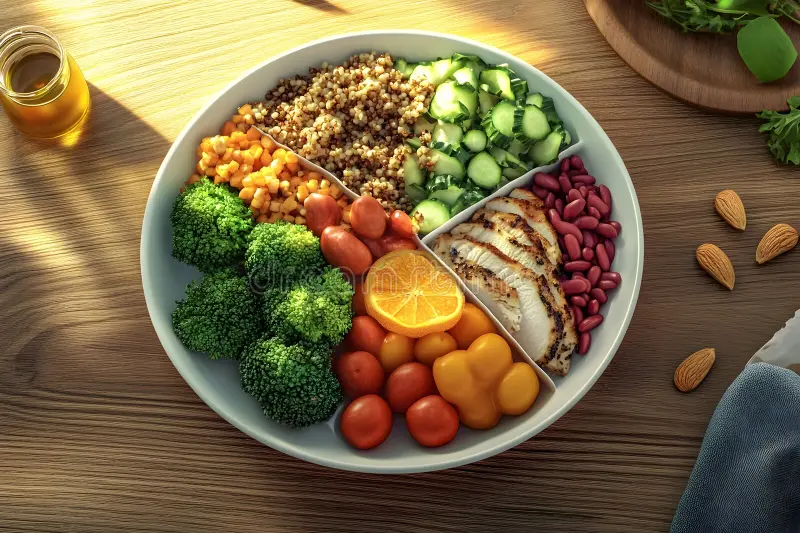
Organize your plate using these visual zones. Proportions are approximate guides, not strict measurements.
Leafy greens, cruciferous vegetables, root vegetables, and fresh herbs form the largest portion of most meals.
Brown rice, quinoa, oats, and whole-grain breads provide sustained energy and dietary fiber.
Water, herbal infusions, and broth-based soups are common hydration choices to include throughout the day.
Legumes, eggs, fish, poultry, tofu, and nuts are versatile protein options that help meals feel complete.
Within two hours of waking, aim for a combination of complex carbohydrates and protein. Examples include oatmeal with nuts, whole-grain toast with avocado, or a vegetable omelet with fruit on the side.
Many people find that a consistent first meal helps maintain a steady rhythm through the afternoon.
Drink one to two glasses of water before your first meal. Add lemon or cucumber for variety without added sugars.
A piece of whole fruit or a small handful of unsalted nuts if needed.
If you consume coffee or tea, pair it with food to reduce acidity discomfort.
Prepare overnight oats or chia pudding the evening before for busy mornings.
Start with a generous serving of vegetables — raw, roasted, or steamed. This adds variety and visual fullness to the plate.
Include a palm-sized portion of whole grains or starchy vegetables as part of a balanced midday plate.
Select a protein source that aligns with your preferences. Plant-based and animal-based options both fit within the framework.
Use herbs, citrus, vinegar, or modest amounts of olive oil, avocado, or nuts to enhance flavor without excess sodium or sugar.
Evening eating frameworks emphasize lighter portions and simpler preparations. Soups, salads with protein, and stir-fries with extra vegetables work well.
Some people prefer to finish eating two to three hours before bedtime for personal comfort. Adjust timing based on what works for you.
500 to 750 ml of water upon waking is a common starting point that many people use to begin their daily hydration routine.
Sip water between meals rather than only during eating. Set gentle reminders if you tend to forget.
Some people choose to taper fluid intake in the last hour before bed based on personal preference.
Snacks can bridge longer gaps between meals. Choose whole foods that combine fiber-rich ingredients with protein sources.
Rotate ingredients with seasonal availability to maintain variety, support local agriculture, and keep meals interesting.
Asparagus, peas, leafy greens, citrus
Tomatoes, berries, zucchini, stone fruit
Squash, apples, root vegetables, brassicas
Citrus, stored grains, hearty soups, preserved foods
Continue to our Meals page for composition methods, prep calendars, and batch cooking workflows.
Explore Meal Frameworks